



- No products in the cart.
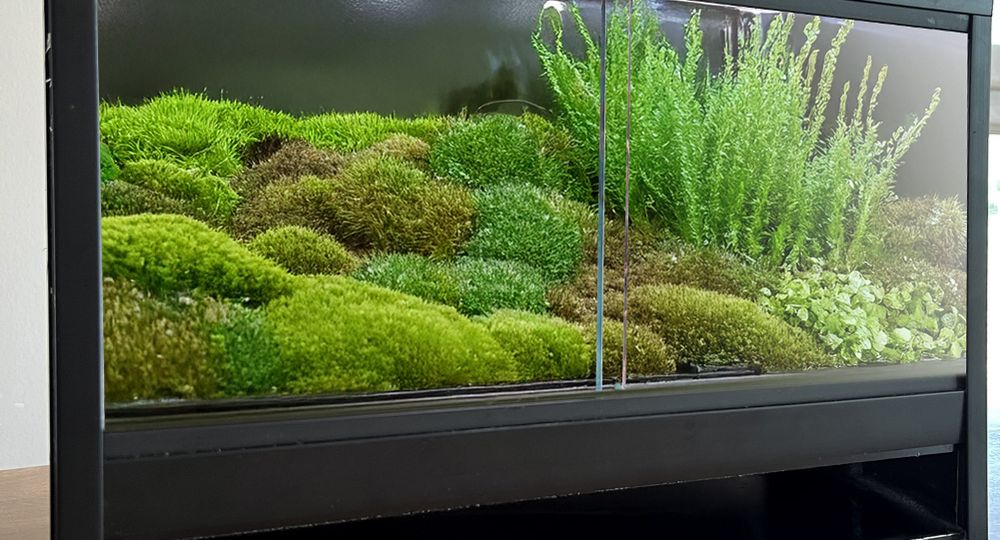
Why moss in a terrarium?
Moss is one of the most popular plants for a terrarium. It provides a natural look, helps retain moisture, and contributes to a healthy microclimate. Whether you have a closed or an open terrarium, moss can play an important role in the balance of your ecosystem. At Biotopo, you will find a tropical moss mix that is ideal for terrariums and ready to use immediately.
Is moss necessary for a terrarium?
Moss isn’t strictly necessary, but it does offer many benefits. It provides:
- Moisture regulation – moss retains water and slowly releases it back into the environment.
- Aesthetics – it creates a fresh, green, and soft appearance.
- Erosion control – in terrariums with slopes, moss helps keep the soil in place.
- Air quality – some types of moss help produce oxygen and maintain more stable humidity levels.
A terrarium without moss can still be beautiful, but it often lacks the natural and soothing atmosphere that moss adds.
What kind of moss for a terrarium?
There are many different types of moss you can use in a terrarium. Some popular choices are:
- Cushion moss (Leucobryum glaucum) – forms soft, spherical cushions.
- Feather moss (Hypnum sp.) – flexible and ideal as a ground cover.
- Java moss (Taxiphyllum barbieri) – often used in aquariums, but also suitable for humid terrariums.
- Star moss (Polytrichum sp.) – grows upright and creates a playful effect.
At Biotopo, you can buy a tropical moss mix , composed of carefully selected species that thrive in a terrarium environment. This way, you can be sure your moss will stay beautiful in your terrarium for a long time.
Can I set up a terrarium without moss?
Yes, you certainly can. Instead of moss, you can use other ground covers, such as:
- Small ferns
- Miniature ivy
- Tropical plants such as Peperomia emarginella or other terrarium plants
- Decorative pebbles or terrarium substrate
However, terrariums without moss often lack the natural look and the moisture-regulating function that moss does provide.
How often should you mist a terrarium?
This depends on the type of terrarium:
- Closed terrarium: usually once a month or even less, because moisture continues to circulate within the ecosystem.
- Open terrarium: spray more often, on average 1–2 times a week, depending on the humidity in your home.
A helpful tip: If the moss in your terrarium becomes dry and lighter in color, it needs water. Condensation droplets on the glass, on the other hand, indicate sufficient moisture.
How long does moss in a terrarium last?
With proper care, moss can last for years. Important factors include:
- Enough water, but not too much.
- Indirect light (no direct sunlight).
- A stable temperature, without drafts or major fluctuations.
Sometimes part of the moss dies off, but you can easily remove or replace it.
Where should you place moss in a terrarium?
Moss in a terrarium grows best in areas with plenty of shade and moisture. You can place it:
- Directly on the substrate, as a soft base.
- On wood or terrarium decorations such as rocks or cork.
- Around plants, to cover bare spots.
Make sure the moss isn’t constantly sitting in water, because it can start to rot.
Additional Tips for Moss in a Terrarium
- Always use clean rainwater or filtered water, because tap water may contain lime, which moss doesn’t like.
- Combine different types of moss for a varied and vibrant look.
- Give the moss time to adjust—sometimes it takes a few weeks before it fully “takes hold.”
Order moss for your terrarium now
at
. Moss in a terrarium not only makes it more beautiful, but also healthier and more stable. Whether you’re a beginner or an experienced terrarium enthusiast, moss lets you create a small ecosystem that can last for years. At Biotopo, you’ll find the right tropical moss mix to bring your terrarium to life. Combine it with terrarium plants, substrate, and decorations for a complete and harmonious result.

 Biotopo