



- No products in the cart.
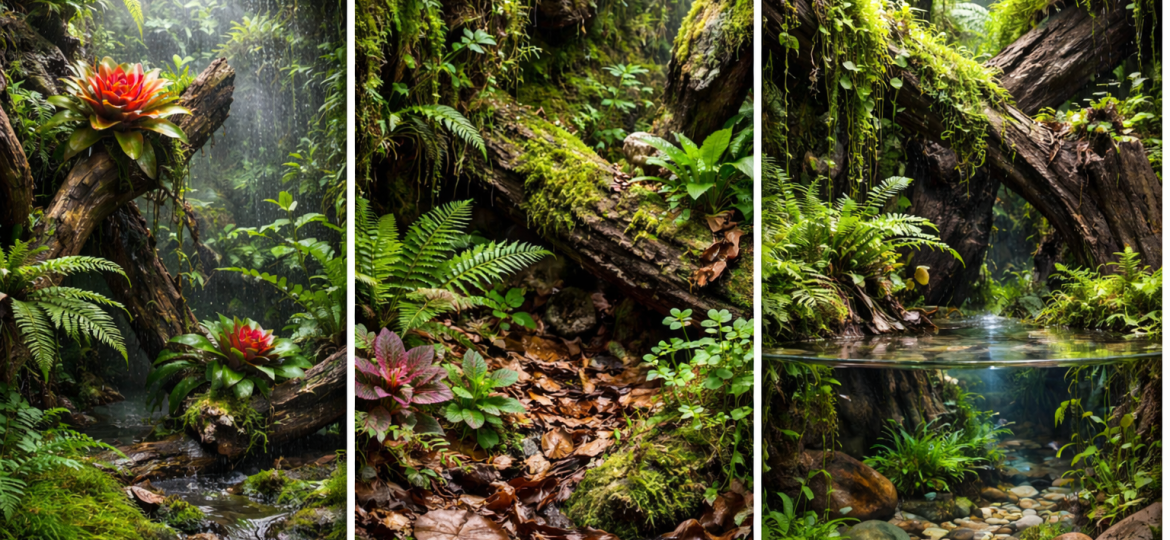
At Biotopo, everything revolves around recreating ecosystems as faithfully as possible. This approach is especially essential in terrariums. A biotope terrarium is not a decorative object, but a living system in which plants, substrate, light, and humidity work together. By taking nature as a starting point, we create tranquility, stability, and sustainability.
Within this vision, aquascaping and terrascaping are not ends in themselves, but means to create a miniature ecosystem. In this article, you’ll learn how to build a natural terrarium using a biotope-oriented approach in line with Biotopo’s vision, with additional insights from biotope aquariums where functionally relevant.
What is a biotope terrarium?
A biotope terrarium is a terrarium designed to mimic a specific natural habitat, such as a tropical rainforest, a forest floor, or a humid transition zone. Not only the choice of plants, but also the substrate composition, microclimate, and materials are tailored to this biotope.
With this approach:
- Plants adapt better to their natural conditions
- a stable microclimate is created
- maintenance remains natural and manageable
- the terrarium develops organically over time
An important foundation for this is knowledge of plant care. In our comprehensive guide on
Caring for Terrarium Plants
explains how light, moisture, and location work together to ensure healthy growth.
Why Biotopo Chooses Naturalistic Terrariums
In nature, nothing exists in isolation. Soil, vegetation, light, and moisture together form a single system. This is even more true in terrariums, because they are closed environments where balance is crucial.
A realistic terrarium:
- promotes sustainable plant growth
- promotes soil life and biological balance
- reduces the need for artificial interventions
- maintains its appearance over the long term
That is why Biotopo consciously chooses functional materials that contribute to ecological processes, rather than decorative elements that serve no natural purpose.
Biotope-inspired natural terrariums
Rainforest Terrarium
The rainforest terrarium is a classic example of habitat-based design. These terrariums are layered, humid, and constantly evolving.
- High and stable humidity
- Epiphytic plants such as bromeliads and orchids
- Mosses, ferns, and climbing plants
- Wood and roots as supporting structures
Lighting plays a key role here. With naturalistic lighting, you can mimic the rainforest’s day-night cycle. You can read more about this on our page about
terrarium lighting.
Forest floor terrarium
A forest floor terrarium focuses on the lower vegetation layers of a forest biotope. Here, substrate and soil life play a leading role.
- Thick, layered soil structure
- Leaf litter and botanicals
- Low plants and ground covers
- Dimmed light and natural shadow
The right soil is essential here. In our selection
Terrarium substrates
offer materials that promote moisture regulation, root growth, and long-term stability.
Paludarium as a transitional habitat
A paludarium forms the transition between land and water and combines elements of both terrariums and aquariums. The emphasis is often on plants and structure above the waterline.
- Wet and Dry Zones
- Riparian plants and mosses
- Wood and stones as natural boundaries
- Natural evaporation process
Materials as the Foundation of the Ecosystem
Wood and Natural Structures
Wood plays a major role in determining the shape and functionality of a biotope terrarium. It provides a surface for epiphytes to attach to, creates hiding spots and places for growth, and adds depth to the display.
Substrate and Soil Structure
The substrate forms the foundation of every terrarium. A well-structured substrate:
- supports root development
- promotes micro- and macrofauna
- regulates moisture and nutrients
- contributes to long-term stability
Botanicals and natural accents
Leaves, bark, and seeds not only enhance the natural look but also play an active role in biological processes within the terrarium.
Light and humidity as controlling factors
Light and humidity are inextricably linked and determine the functioning of the ecosystem.
- Support for photosynthesis
- Creating microclimates
- Control of growth and resting phases
- Mimicking natural rhythms
Aquarium as an additional biotope example
Blackwater biotope aquarium
Although the focus at Biotopo is strongly on terrariums, biotope aquariums offer valuable insights. The blackwater aquarium, in particular, aligns with the same ecological principles.
- Use of Botanicals
- Rootwood as a base structure
- Subdued, sparse planting
- Subdued lighting
This approach demonstrates that natural balance can be a guiding principle both above and below the water.
Practical tips for biotope-oriented terrarium design
- Always start with structure and soil
- Think in terms of ecosystems, not individual products
- Work with elevation, shade, and moisture zones
- Give plants time to adapt
- Observe and make only minimal adjustments
Biotopo’s Vision
At Biotopo, we believe that a terrarium is more than just a display. It is a living ecosystem in which every choice affects the whole. Plants, substrate, light, and natural materials work together and continue to evolve.
Our vision is based on a biotope-oriented approach: observing how nature functions and applying these principles as faithfully as possible. Not forced perfection, but a realistic, sustainable representation of nature in miniature.
Frequently Asked Questions About Biotope Terrariums
What exactly is a biotope terrarium?
A biotope terrarium is a terrarium designed to mimic a specific natural habitat, such as a tropical rainforest or a forest floor. All elements—from plants and substrate to lighting and humidity—are tailored to that ecosystem, creating a stable and natural environment.
What is the difference between a biotope terrarium and a regular terrarium?
In a standard terrarium, the emphasis is often on appearance and decoration. In a biotope terrarium, the ecosystem takes center stage. Materials and plants play a functional role and work together, allowing the terrarium to develop naturally and require less maintenance.
Which plants are suitable for a biotope terrarium?
That depends on the chosen biotope. In a rainforest terrarium, epiphytic plants such as bromeliads, mosses, ferns, and orchids are often used. In a forest floor terrarium, the focus is on shade-tolerant plants and ground covers. It’s important that all plants have the same light and moisture requirements.
Is a biotope terrarium difficult to maintain?
A well-designed biotope terrarium is actually relatively low-maintenance. Because the ecosystem is in balance, you don’t need to make as many adjustments with water, food, or pruning. Regular observation is more important than active intervention.
How important is the substrate in a biotope terrarium?
The soil forms the basis of the ecosystem. A layered soil structure supports root growth, stimulates soil life, and helps regulate moisture and nutrients. Without a well-functioning soil, a biotope terrarium cannot become stable.
What role does lighting play in a biotope terrarium?
Lighting regulates photosynthesis, growth, and rest periods in plants. By adjusting the lighting to match the natural habitat, you can mimic the day-night cycle and create microclimates. This contributes to the healthy and natural development of the terrarium.
Can I use aquarium materials in a biotope terrarium?
Some materials, such as wood and botanicals, can be used in both aquariums and terrariums. However, you need to take into account differences in humidity and ventilation. Not all aquarium materials are suitable for long-term use above water.
How long does it take for a biotope terrarium to stabilize?
A biotope terrarium needs time to develop. During the first few weeks and months, plants adapt and soil life begins to develop. After this initial phase, the ecosystem becomes increasingly stable and requires less maintenance.
Is a biotope terrarium suitable for beginners?
Yes, as long as you choose a simple biotope and use appropriate materials and plants. By taking a biotope-oriented approach from the start, you’ll avoid many problems and lay a stable foundation for the future.

Related Posts

 Biotopo