



- No products in the cart.

Bioactive terrarium substrate: how to build a natural terrarium floor
Bioactive terrarium substrate forms the foundation of a natural terrarium in which plants, microfauna, and organic matter combine to create a living soil system. When setting up a terrarium, a great deal of attention is paid to plants, wood, stones, and lighting, yet a tremendous amount of activity takes place beneath that visible décor.
A good terrarium substrate helps retain and distribute moisture, gives plants room to take root, and provides a habitat for springtails, woodlice, and other small soil-dwelling creatures. At the same time, the substrate largely determines the natural appearance of the terrarium.
That is why, at Biotopo, we prefer not to use a single, universal substrate for every terrarium. A tropical rainforest requires a different type of substrate than a dry savanna. With the right bioactive terrarium substrate, you can create a soil base that is much better suited to the climate, plants, and animals within the enclosure.
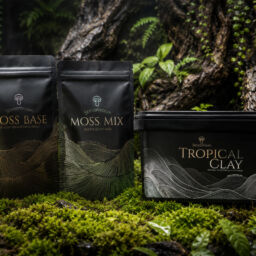
Soilico’s products, in particular, offer great possibilities for this. For tropical setups, we like to combine them with our own Terrarium Substrate, Tropical Isopod Substrate, and natural Colombian Leaf Litter.
What makes bioactive terrarium substrate different?
A bioactive terrarium substrate is much more than just a layer of soil on the bottom. It is a combination of materials where moisture, air, plant roots, leaves, and soil life come together.
In nature, the forest floor is never uniform throughout. It may be damp directly beneath a thick layer of leaves, while a higher-lying area remains relatively dry. The soil structure around plant roots differs from that in open areas, and organic matter is constantly becoming part of the soil.
That variation is also valuable in a terrarium.
A highly compacted substrate can retain a great deal of water but, at the same time, contain very little air. Conversely, soil that is too loose can dry out quickly. Combining fine and coarse materials creates small zones, each with its own distinct properties.
This is important for plants, but certainly also for microfauna. Springtails and woodlice move through the substrate, beneath leaves, and between wood and other organic material.
Soilico TropicSoil as a base for a tropical soil
Soilico TropicSoil is an excellent base for a humid, tropical, or bioactive terrarium.
TropicSoil has been developed for tropical and bioactive terrariums and complements natural setups featuring bromeliads, ferns, moss, wood, and other tropical plants. Its dark, natural appearance also provides an excellent backdrop for roots, leaves, and greenery.
When building up a bioactive terrarium substrate, TropicSoil does not need to be applied at a uniform depth. You can create a deeper layer around plants, while keeping the substrate thinner in open areas. Drier and moister zones can also be created—for instance, by ensuring higher moisture levels beneath wood and leaf litter.
This results not only in a more natural-looking landscape but also in various microclimates within the same terrarium.
Create variations in height for more depth.
A simple way to make the bottom look much more natural is to avoid laying it out completely flat.
For example, have the substrate slope upwards towards the back. Partially embed stones and wood in the substrate and create mounds around larger plants.
This makes it appear as though the layout grew out of the ground, rather than all the components having been placed on top of a flat surface at a later stage.
This also makes a big difference visually. Even a relatively compact terrarium can appear deeper and more spacious as a result.
Biotopo Terrarium Substrate as a natural blend
In addition to Soilico, you can use our own Biotopo Terrarium Substrate for tropical setups.
This substrate consists of a natural blend of various materials and contains, among other things, activated charcoal, bark, and shredded fern root. Its varied structure makes it suitable for tropical plants and for creating a soil with a non-uniform composition.
It can be used on its own as a bioactive terrarium substrate, but it is also interesting when combined with other materials.
For example, you can mix certain zones with extra organic matter, while creating space for woodlice and springtails beneath wood and leaves. This results in a soil that is far more varied than if you simply spread a single material over the entire soil surface.
Moreover, a bioactive soil does not need to look completely ‘finished’ on day one. Plants take root, leaves gradually change, and microfauna move increasingly through the various layers. That is precisely part of the natural process.
Isopods and springtails belong to the soil.
Isopods and springtails live largely out of sight. They move through the substrate, beneath wood, and under the layer of leaves covering the ground. Consequently, these animals benefit far more from a varied substrate than from a single, uniform layer.
With Tropical Isopod Substrate, you can create extra interesting zones for tropical isopods.
You do not need to construct the entire substrate layer from this material. For instance, use it in specific areas underneath cork, wood, or a thick layer of leaf litter.
In such places, the soil often remains somewhat moister, creating a sheltered microhabitat. By combining different soil materials, the microfauna can seek out the zones that are most suitable at any given time.
A dry terrarium also requires a well-planned substrate.
When hearing the term “bioactive terrarium substrate,” many people immediately think of a tropical rainforest, yet the substrate is also a crucial component of the overall setup in drier terrariums.
For a savanna, steppe, or semi-arid terrarium, Soilico SavannaSoil Red is an interesting choice, for example.
The warm, reddish-brown appearance blends perfectly with rocks, dry wood, and drier vegetation. By not distributing the material evenly, you can create a much more natural-looking landscape.
Let the ground rise up against the stones, create a raised area in places, and allow different structures to blend into one another.
Especially in a desert- or savanna-style setup, a flat substrate can quickly look unnatural. In nature, you see a mix of elevation changes, eroded patches of ground, stones, sand, and more compacted areas.
Extra structure with Soilico clay and sand
In addition to complete substrates, Soilico also offers materials that allow you to further refine the soil.
With ReptileClay, for example, you can create firmer and more compact areas. A dark variant like ReptileClay Black offers a completely different look compared to reddish-brown savanna soil and can be used for dark rock and earth structures.
Sand can also be used to create transitions and give specific zones a visually distinct texture.
The goal is not to pack as many different materials as possible into a single terrarium; rather, the aim is to ensure that every structure has a logical place within the chosen biotope.
Leaf litter completes bioactive terrarium substrate.
In a tropical terrarium, the substrate layer isn’t limited to the substrate material itself. A good layer of leaf litter is an important component of natural, bioactive terrarium substrate.
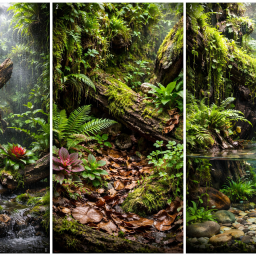
In a rainforest, you will hardly ever see large areas of bare soil. Fallen leaves cover the ground and, together with twigs, wood, and other organic material, form a natural top layer.
This layer is particularly attractive to ispods and springtails. Moisture is retained longer beneath the leaves, creating countless small hiding places.
At the same time, leaf litter immediately gives the terrarium a much more natural visual appearance.
Colombian Leaf Litter for a South American look
For a natural rainforest floor, we at Biotopo like to use our Colombian Leaf Litter.
The various types of leaves come from Colombia and differ distinctly in shape and structure. As a result, using multiple types allows you to create a much more varied forest floor than if you were to use only a single type of leaf.
Colombian Avocado Leaves have a relatively broad, robust shape, making them stand out beautifully against dark terrarium substrate.
Colombian Mango Leaves are longer and narrower, thereby immediately adding extra variety to the leaf layer.
With Colombian Guadua Leaves you add yet another completely different texture. Guadua offers a finer, more layered appearance, making it an excellent match for larger leaves.
Don’t leave leaf litter looking too tidy.
When using leaf litter on top of bioactive terrarium substrate, there is absolutely no need to create a perfectly even layer.
In nature, leaves lie scattered about. Some lie flat, while others overlap or partially disappear beneath wood and plants.
Therefore, create a thicker layer in certain spots while leaving some soil visible elsewhere. Leave a leaf resting against a root or stone, and tuck smaller pieces in between larger leaves.
It is precisely that irregularity that gives the base more depth.
Combining Soilico and Colombian Leaf Litter
One of our favorite ways to build a tropical substrate is by using Soilico and Colombian Leaf Litter together.
Start, for example, with Soilico TropicSoil as the base substrate. Incorporate Tropical Isopod Substrate in sheltered areas, then position wood, roots, and plants.
On top of that comes the visible forest floor.
For example, use avocado leaves as larger leaves, supplement them with mango leaves, and add guadua leaves for a finer texture.
This gives the bioactive terrarium substrate multiple layers and creates a natural transition from the deeper soil to the visible leaf litter.
Over time, such a substrate changes naturally. That is precisely the intention. Leaves age, plants continue to grow, and soil life spreads throughout the terrarium.
How deep should bioactive terrarium substrate be?
The ideal depth of bioactive terrarium substrate depends on the size of the terrarium, the animals, and—above all—the plants.
A densely planted tropical terrarium requires more substrate volume than a setup with few plants. Roots need sufficient space, and a deeper substrate makes it easier to create different moisture zones.
However, the bottom does not have to be equally deep everywhere.
It can be built up higher around plants, while remaining lower at the front. You can create deeper organic zones beneath large pieces of wood, while leaving more of the surface visible in other areas.
This allows you to combine functionality with a much more natural interior style.
Which bioactive terrarium substrate do you choose?
The best bioactive terrarium substrate usually does not consist of a single product..
Soilico TropicSoil forms a strong foundation for tropical setups. Biotopo Terrarium Substrate offers a versatile natural blend for tropical and planted terrariums, while Tropical Isopod Substrate provides additional structure for soil life.
For a dry savanna or steppe setup, you can start with Soilico SavannaSoil Red and combine it with suitable clay, sand, and rock structures.
In a tropical setup, a natural layer of leaf litter ultimately forms the transition between the substrate and the rest of the terrarium. By using Colombian Avocado Leaves, Colombian Mango Leaves, and Colombian Guadua Leaves, you can combine various shapes and textures to create a natural, diverse forest floor.
A high-quality bioactive terrarium substrate not only supports plants and microfauna but ultimately plays a major role in determining how convincing the overall terrarium setup looks.

Related Posts
 Biotopo