
Neoregelia Bumblebee – a mini bromeliad with distinctive tiger stripes
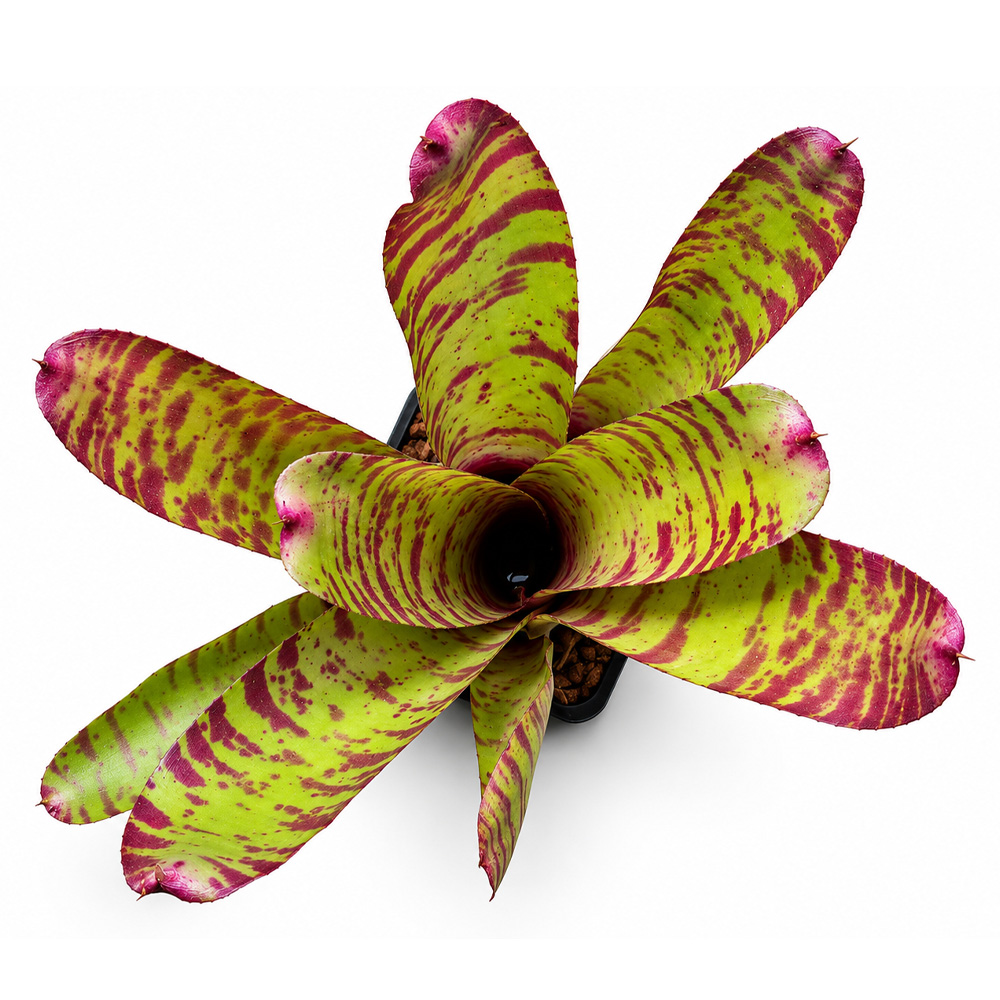
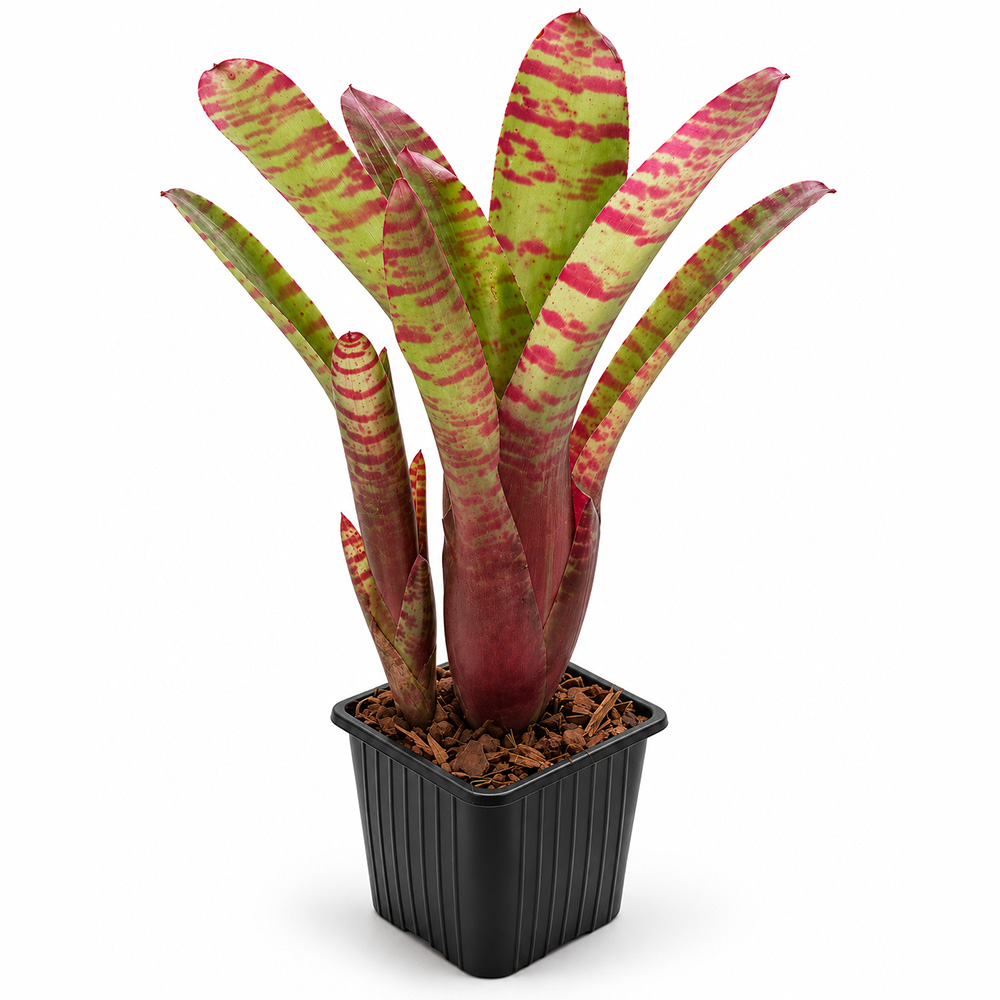
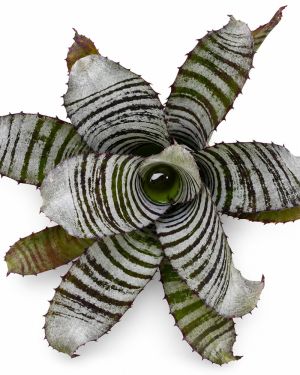
The Neoregelia Bumblebee is a striking tropical bromeliad that immediately catches the eye with its distinctive leaf pattern. The fresh lime to yellow-green leaves feature dark reddish-brown cross-bands. This creates a playful contrast reminiscent of a bumblebee’s striped appearance.
This small bromeliad is a wonderful choice for lovers of tropical terrariums, miniature jungles and unusual plants. The compact rosette takes up relatively little space and combines beautifully with mosses, small ferns and other tropical plants.
The striking leaf pattern really comes into its own, particularly in a natural setting with cork bark, twigs and green plants.
Fresh green leaves with dark red cross-stripes
The most distinctive feature of the Neoregelia Bumblebee is the combination of light leaf colours and dark transverse bands.
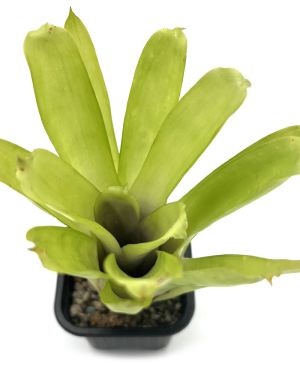
The leaves have a fresh, yellow-green to lime-green base colour. Over this run dark red to brown-red stripes, which are irregularly distributed across the leaf.
The stripes can vary in width and intensity, giving each plant its own unique appearance.
In sufficiently bright light, the contrast between the light leaves and dark stripes is usually more pronounced. In lower light, the colour pattern may become more subtle.
This unique combination of colours makes the Bumblebee an attractive alternative to the well-known red and purple Neoregelia cultivars.
A compact bromeliad for small terrariums
Thanks to its compact growth habit, the Neoregelia Bumblebee is particularly well-suited to terrariums where space is limited.
The leaves grow from a central rosette and together form a compact plant with a natural appearance.
This allows you to use the bromeliad as an eye-catching splash of colour without it overwhelming the rest of the planting.
For example, place the Bumblebee amongst green mosses and small ferns, or attach it to a piece of cork bark against the back wall.
This mini-bromeliad also looks stunning in larger terrariums. By combining several compact bromeliads at different heights, you can create a densely vegetated tropical landscape rich in detail.
A colourful accent in your miniature rainforest
A natural terrarium becomes even more interesting when you combine different leaf shapes, textures and colours.
The Neoregelia Bumblebee is a wonderful choice for this.
The light-coloured leaves provide a fresh splash of colour, whilst the dark cross-stripes add a striking pattern.
Combine the plant with soft moss cushions, small ferns and natural pieces of wood. Against a dark background of cork bark, the light leaf colours stand out beautifully.
Combining it with other mini bromeliads also creates a varied display.
By using plants with different leaf colours and growth habits, you can create a vibrant miniature rainforest.
Natural water cup in a tropical vivarium
Like other Neoregelia bromeliads, the Bumblebee forms a central rosette in which small amounts of water can be collected.
This natural water cup gives the plant an additional function in a tropical vivarium.
Water-retaining bromeliads can provide hiding places and small water reservoirs for various terrarium inhabitants.
For some species of poison dart frogs, suitable bromeliads also play a role during reproduction.
Whether the water cup of a specific Bumblebee is suitable for housing larvae depends on the size, depth and water quality of the reservoir, as well as the needs of the frog species in question.
The Neoregelia ‘Bumblebee’ is therefore primarily an attractive decorative bromeliad that also adds natural water-retaining structures to the terrarium layout.
Epiphytic growth on wood and cork bark
The Neoregelia Bumblebee is ideal for epiphytic cultivation. This means you can attach the plant to a branch, a piece of cork bark or a suitable terrarium back wall.
The roots serve primarily to anchor the bromeliad to the substrate.
A thick layer of potting compost is therefore not necessary.
You can carefully secure the plant with suitable binding material until the roots have attached themselves to the wood.
For a natural look, you could apply a small amount of live sphagnum moss around the roots.
Ensure that the base of the plant receives sufficient air and does not remain constantly wet.
Light and colour development
Sufficient light is important for healthy, compact growth and attractive leaf markings.
Ideally, place the Neoregelia Bumblebee in a bright spot with bright, indirect light.
In a terrarium, you can use suitable LED plant lighting, for example from Skylight.
With sufficient light, the dark reddish-brown stripes and the vibrant leaf colours can stand out more clearly.
If there is too little light, the plant may develop less pronounced leaf markings.
Avoid prolonged exposure to bright, direct sunlight through glass. This can cause the leaves to overheat or become damaged.
Caring for Neoregelia Bumblebee
Temperature
A temperature of between approximately 20 and 26 °C is a suitable starting point for this tropical bromeliad. Avoid prolonged cold spells and large temperature fluctuations.
Humidity
A higher level of humidity, around 65 to 85 per cent, is beneficial. Also ensure there is sufficient air circulation to prevent the leaves and roots from remaining wet for long periods.
Watering
The central rosette can retain small amounts of clean, preferably low-mineral water. Change this regularly and prevent dirt and plant debris from accumulating.
Substrate
Secure the plant to wood or cork bark, or use a light, well-draining substrate. Ensure the roots do not remain constantly wet.
Fertilisation
The Neoregelia Bumblebee requires little additional fertiliser. If necessary, use a highly diluted, suitable plant fertiliser. In terrariums containing animals, care must be taken to prevent contact between fertiliser and the animals.
Growth and propagation
Over time, the bromeliad may develop new side shoots. These grow into independent rosettes and can eventually be carefully separated from the mother plant.
Specifications
| Characteristic | Specification |
|---|---|
| Product name | Neoregelia Bumblebee |
| Botanical name | Neoregelia ‘Bumblebee’ |
| Family | Bromeliaceae |
| Plant type | Tropical mini-bromeliad |
| Leaf colour | Lime to yellow-green |
| Leaf pattern | Dark red to brown-red transverse stripes |
| Growth habit | Small, rosette-forming bromeliad |
| Light requirements | Bright, indirect light |
| Temperature | Preferably 20–26 °C |
| Humidity | Approximately 65–85% |
| Water requirements | Clean water in the central rosette |
| Location | Epiphytic on wood or in a well-aerated substrate |
| Uses | Tropical terrarium, miniature jungle and vivarium |
| Distinguishing feature | Strikingly striped leaves with a fresh green base colour |
Care instructions
Attach the Neoregelia Bumblebee to a small piece of cork bark, a natural branch or a suitable terrarium backing. Choose a bright spot where the rosette has enough space to develop.
Combine the bromeliad with green mosses, small ferns and other compact tropical plants.
The fresh lime to yellow-green leaves form a beautiful contrast with the dark horizontal stripes and the green surroundings.
By placing several small bromeliads at different heights, you can create a natural miniature jungle with plenty of variety.
Keep the roots well-aerated and ensure the base of the plant does not remain wet for long periods. Make sure there is clean water in the central rosette and change it regularly.
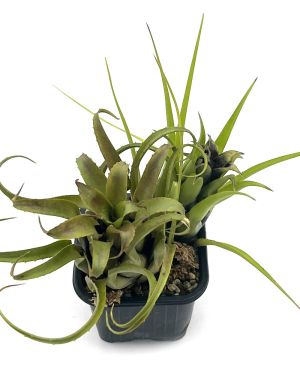
As this is a living, natural product, the leaf colour, intensity of the stripes and growth habit may vary from plant to plant.


Biotopo
Reviews
There are no reviews yet