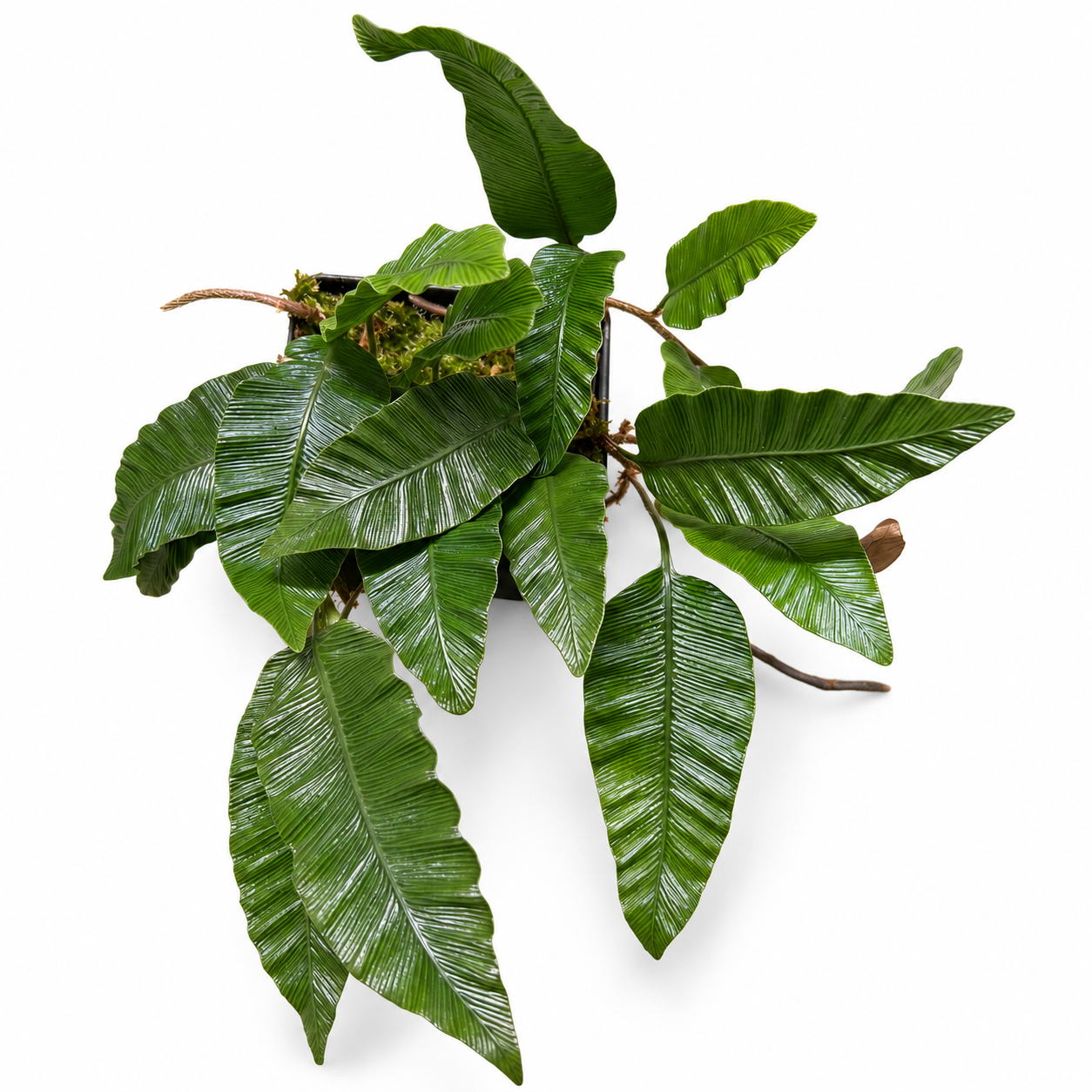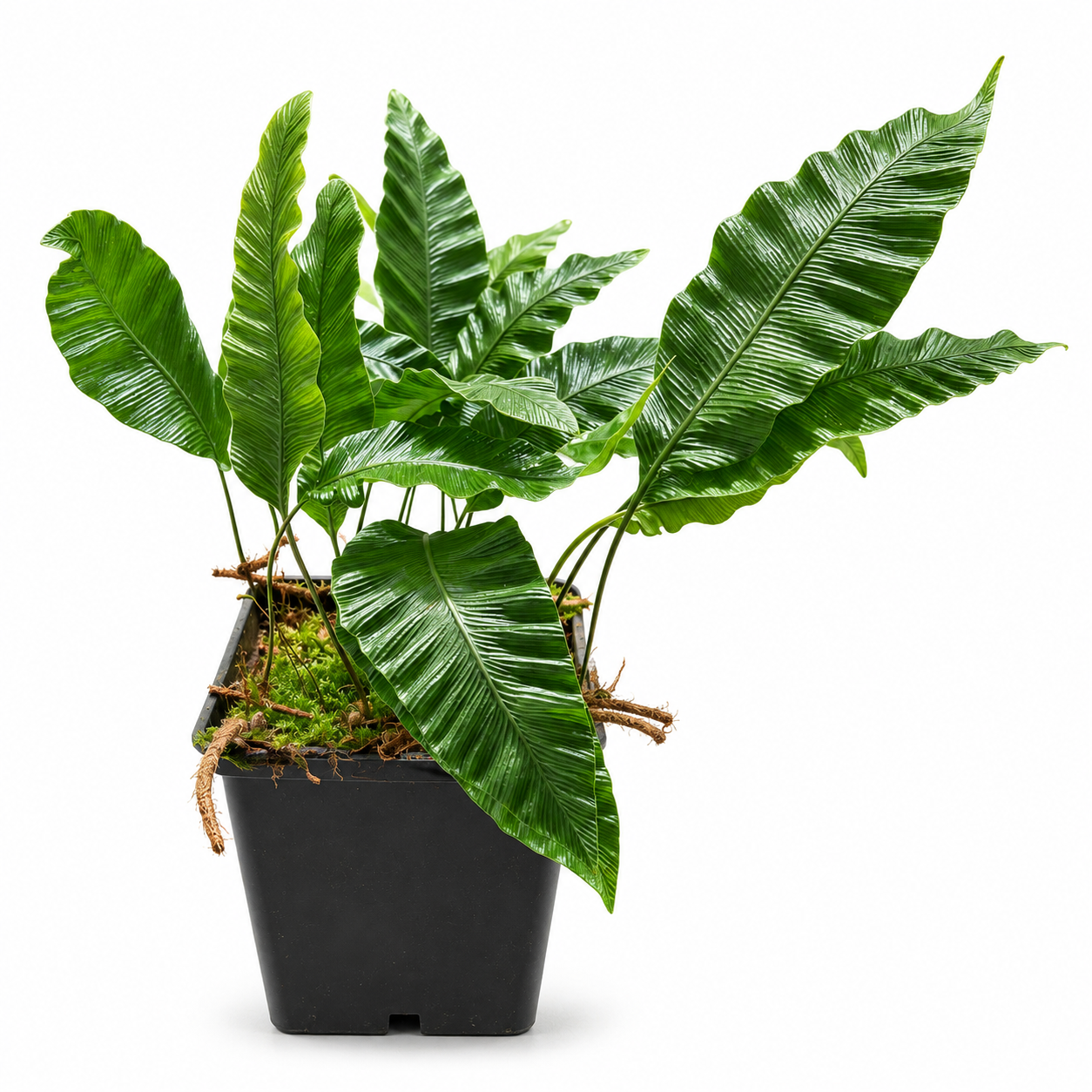

Humata heterophylla – a unique fern for terrariums and bottle terrariums
Humata heterophylla is a unique tropical fern which, with its creeping growth habit and distinctive leaves, lends a natural look to any terrarium. This fern is native to tropical regions of Asia and Oceania, where it grows on trees and rocks, amongst other places.
What makes this plant so interesting is that it does not just grow upwards from the substrate. The creeping rhizomes can spread across wood, cork bark and other surfaces, creating a beautiful green landscape over time.
This makes Humata heterophylla particularly suitable for tropical terrariums, bottle terrariums, mini-ecosystems and bioactive vivariums.
Two distinct leaf forms on a single plant
The name heterophylla refers to the different leaf shapes that this fern can develop.
The plant produces two types of leaves. The sterile leaves are relatively simple in shape, often elongated to oval, with a clearly visible vein structure.
The fertile leaves, on which the spores are formed, have a more deeply incised, more pinnate shape.
This difference gives the plant a distinctive appearance. The combination of different leaf structures provides variety and makes Humata heterophylla of interest to enthusiasts of unusual tropical plants.
The leaves are green and have a relatively sturdy structure. Combined with the creeping rhizomes, this creates a natural, slightly wild look.
Ideal for bottle terrariums and mini-ecosystems
Thanks to its compact leaves and creeping growth habit, Humata heterophylla is an excellent choice for bottle terrariums or tropical terrariums.
In a bottle terrarium, you can use this fern to allow it to slowly cover a piece of wood or cork bark. This creates a natural miniature rainforest with varying heights and textures.
This unusual fern also looks stunning amongst green mosses, small ferns and other tropical terrarium plants.
The plant thrives in high humidity, but at the same time requires sufficient oxygen around its rhizomes. An open or ventilated bottle terrarium is therefore a safe choice.
Avoid leaving the rhizomes in stagnant water for long periods.
Natural vegetation for terrarium backdrops
One of the most beautiful characteristics of Humata heterophylla is its ability to creep across surfaces.
The rhizomes can spread along cork bark, branches and terrarium back walls. This allows you to use the fern to gradually transform a bare background into a naturally overgrown wall.
The plant looks particularly attractive when attached slightly higher up in the terrarium. The leaves then have sufficient space to develop and the rhizomes can spread along the substrate.
Combine Humata heterophylla with green mosses, small bromeliads and other epiphytic plants to create a varied tropical landscape.
Suitable for tropical vivariums and poison dart frog terrariums
Humata heterophylla is also a valuable addition to a bioactive vivarium or poison dart frog terrarium.
The fern thrives in the warm, humid conditions replicated in many tropical terrariums.
Its creeping growth habit adds extra texture amongst branches, back walls and other plants. Furthermore, the plant helps to create a natural and densely vegetated appearance.
Particularly when combined with bromeliads, mosses and other small tropical plants, it creates a varied layout with different leaf shapes and natural hiding places.
In this context, Humata heterophylla serves primarily as a decorative plant that defines the structure of the display.
Epiphytic growth on cork bark and wood
Humata heterophylla often grows epiphytically in the wild. This means that the fern can establish itself on trees or other surfaces without living as a parasite.
To create a natural terrarium layout, you can attach the plant to a piece of cork bark or a sturdy branch.
If necessary, use a small amount of live sphagnum moss to keep the roots moist whilst they take root.
The creeping rhizomes must not be completely buried. They need sufficient air to remain healthy.
The fern can also grow in an airy, well-draining terrarium substrate, provided the rhizomes do not remain constantly wet.
Light and location
Humata heterophylla grows best in soft, indirect light.
In the wild, this fern often grows in sheltered spots where sunlight is filtered through the surrounding vegetation.
You should therefore preferably place the plant in a bright spot without harsh, direct sunlight.
In a terrarium, suitable LED plant lighting is sufficient to support healthy growth. Avoid placing it directly beneath a very powerful lamp if this causes the leaves to become too warm or dry.
Indirect daylight or suitable plant lighting is also a good choice in a bottle terrarium.
Caring for Humata heterophylla
Temperature
A temperature of around 18–26 °C is suitable for this tropical fern. Avoid prolonged cold spells and large temperature fluctuations.
Humidity
The plant grows best in high humidity, preferably around 70–90 per cent. Also ensure there is some air circulation to prevent the soil from remaining wet for too long.
Watering
Keep the root zone slightly moist, but not waterlogged. Preferably use rainwater or other water low in minerals. Allow any excess water to drain away thoroughly.
Substrate
Use an airy mixture containing, for example, fine orchid bark and sphagnum moss. When grown epiphytically, the fern can grow directly on cork bark or wood.
Fertilisation
Humata heterophylla requires little nutrition. If necessary, use a heavily diluted plant fertiliser. Avoid fertilisers that could be harmful to animals in a vivarium.
Growth and propagation
The fern spreads via creeping rhizomes. Once a rhizome is sufficiently developed, the plant can be carefully propagated by separating a section with roots and leaves.
Specifications
| Characteristic | Specification |
|---|---|
| Botanical name | Humata heterophylla |
| Family | Davalliaceae |
| Plant type | Tropical fern |
| Origin | Tropical Asia and Oceania |
| Leaf colour | Green |
| Leaf shape | Sterile and fertile leaves of various shapes |
| Growth habit | Creeping and climbing, epiphytic |
| Light requirements | Soft, indirect light |
| Temperature | Preferably 18–26 °C |
| Humidity | Approximately 70–90% |
| Water requirements | Keep the soil slightly moist at all times, but not waterlogged |
| Uses | Bottle terrarium, mini-ecosystem, tropical terrarium and vivarium |
| Special features | Creeping rhizomes and two different leaf shapes |
Care instructions
Attach the Humata heterophylla to a piece of cork bark, a sturdy twig or a suitable terrarium backing. Position the rhizomes as close to the surface as possible and ensure they receive sufficient air.
In a bottle terrarium, you can use the fern to allow a small piece of wood or a raised surface to become naturally overgrown. Combine the plant with green mosses, small ferns and compact tropical plants to create an atmospheric miniature rainforest.
Ensure high humidity and soft, indirect light. Keep the roots slightly moist, but avoid standing water around the rhizomes.
In a larger vivarium, you can attach the plant to the back wall or to a branch. Over time, the fern can spread across the substrate and form beautiful natural vegetation.
As this is a living, natural product, the shape, leaf development and growth habit may vary from one specimen to another.


Biotopo
Reviews
There are no reviews yet