



- No products in the cart.
Poison Dart Frogs the colorful jewels of the rainforest
In the lush rainforests of Central and South America, an impressive diversity of flora and fauna grows and thrives. Within this ecological paradise live some of the most fascinating and captivating creatures: poison dart frogs. With their vibrant colors, intriguing behavior, and complex ecology, these small amphibians have captured the interest and admired by scientists, nature lovers and adventurers around the world. It is this profound fascination and love that led to the creation of the Biotopo webshop. Our aim is to meet the needs of these wonderful animals by offering high quality terrarium products.
The poison dart frog collection at Biotopo
toegevoegd aan winkelwagen
Bekijk winkelwagen
Afrekenen
Item added to wishlist
View Wishlist
Item removed from wishlist
The biological background of Oophaga poison dart frogs
Oophaga is a genus of Poison dart frogs belonging to the family Dendrobatidae. This family is known for its bright colors and potentially toxic properties. Oophaga poison dart frogs are no exception to this. They are native to the tropical rain forests of Central and South America, where they have adapted to diverse habitats ranging from the forest floor to the leafy canopy. The species within this genus range in size from 15 to 38 mm, which is considered small to medium-sized. These diurnal amphibians inhabit a variety of environments, ranging from climbing ground and understory dwellers to fully arboreal species. Unlike many other amphibians, no amplexus takes place during reproduction. Clutches are relatively small, varying from 2 to 14 eggs per clutch. Both the male and female carry the tadpoles on their backs, usually one at a time. The eggs are often deposited in bromeliads, where the tadpoles feed on the eggs. This unique begging behavior causes the female to lay several unfertilized eggs, which serve as a food source for the tadpoles.
Lifestyle and behavior of Oophaga poison dart frogs
One of the most intriguing aspects of Oophaga Poison dart frogs is their complex behavior. These frogs often exhibit monogamous behavior and have strong territorial tendencies. Within most species, the male plays a crucial role in caring for the eggs and tadpoles. After the female lays the eggs, the male carries them to small water-bearing places, such as plant leaves or tree cavities, where the eggs develop into tadpoles. The male closely monitors these locations and supplies the tadpoles with food by secreting certain nutrients from his skin. This brood care is vital to the survival rate of the offspring.
The Colorful Defense of Poison dart frogs
The vibrant colors and patterns of Oophaga Poison dart frogs are not only visually appealing, but also serve as a powerful warning signal. The bright yellow, red, blue and green on their skin acts as a visual deterrent to potential predators. These colors indicate that the frogs are potentially dangerous and possibly poisonous. The toxicity of Oophaga Poison dart frogs is a fascinating example of evolutionary adaptation. In the wild, these frogs feed on poisonous insects, such as ants and beetles, which they store in their skin and tissues. This makes them unattractive prey for predators. In a poison dart frog terrarium, the frogs are typically fed a diet of fruit flies, springtails, and aphids, causing them to lose their toxicity.
Species diversity within the Oophaga poison dart frog family
Within the genus Oophaga, there are several notable species with unique traits and characteristics. Some remarkable examples of these poison dart frogs are:
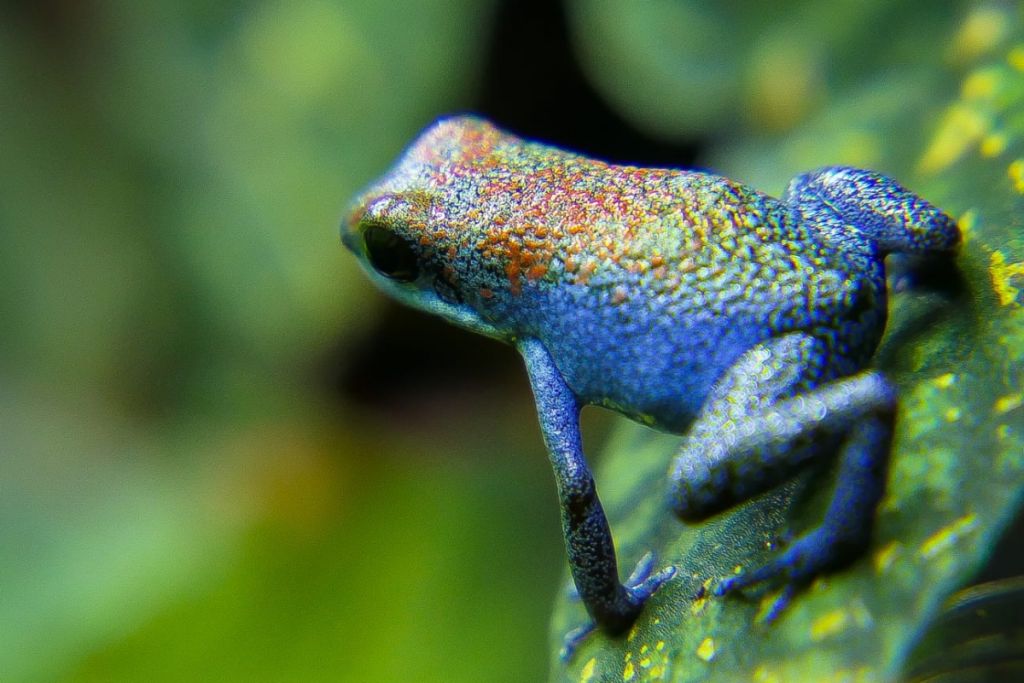
Oophaga Pumilio
Also known as the blue poison dart frog or strawberry poison frog. Oophaga pumilio, is one of the most iconic species within the genus. They are found in Central American countries such as Costa Rica and Panama. Each population of Oophaga pumilio can have its own color variations, making them an intriguing example of adaptive radiation.
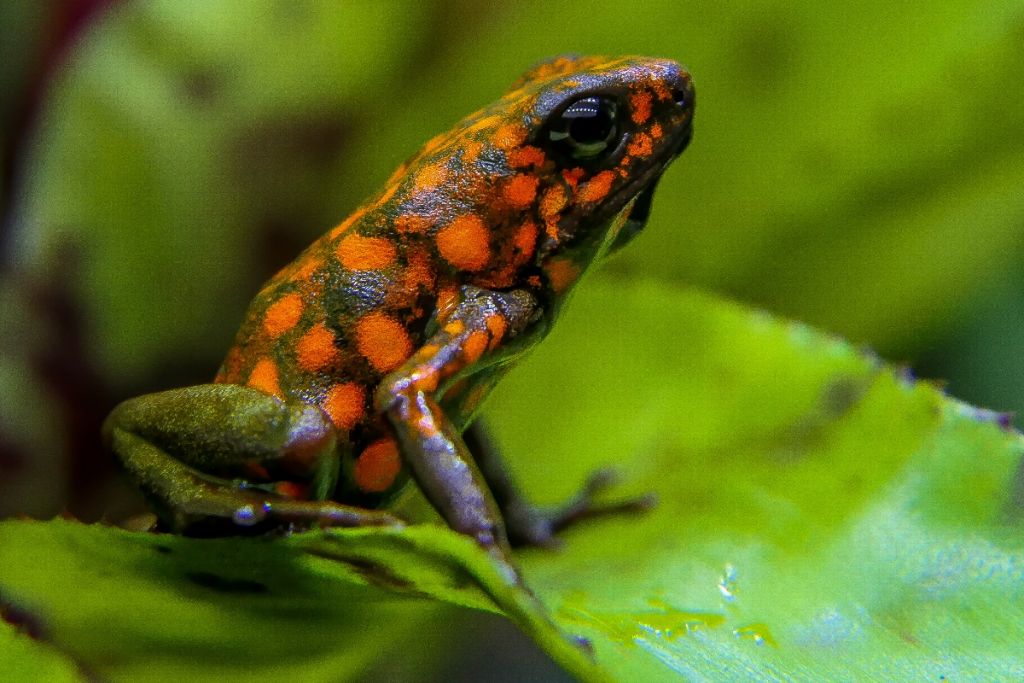
Oophaga Sylvatica
Oophaga sylvatica, also known by the Spanish name diablito, is a frog species belonging to the family Dendrobatidae. This species occurs in southwestern Colombia and northwestern Ecuador. Its natural habitat includes lowland and submontane rainforests, although the frog can also survive in moderately degraded areas, especially in the more humid parts of its range. The coloration of this poison dart frog varies from bright red to brilliant yellow, allowing it to camouflage effortlessly among leaves and forest floor vegetation.

Oophaga Histrionica
Oophaga histrionica, exhibit a remarkable diversity of colors. These motley amphibians have a range of hues, including orange-brown, bright yellow, red and white, often combined with a vivid pattern of black or brown spots. In some populations, powerful black or chocolate brown patterns, leaving only a single colored dot or a few spots in vivid red, yellow, blue or white. The color patterns on the back are often reflected in the legs and belly side of these frogs.

Oophaga Lehmanni
The Oophaga lehmanni, also known as Lehmann’s poison frog, is very similar in biotope and behavior to the species O. histrionica and O. sylvatica. These frogs are mainly found on the forest floor, where they move among the fallen leaves. However, they always keep near bromeliads that harbor small pools of water in their leaf axils. In O. lehmanni habitat, these often involve bamboo stumps or hollows in smaller trees. The clutches, consisting of 4 to 10 eggs, are carefully placed among the fallen leaves. The Oophaga lehmanni poison dart froghas a striking orange or yellow coloration with black spots and stripes. This species inhabits mainly the rain forests of Colombia and is known for its refined and delicate appearance.
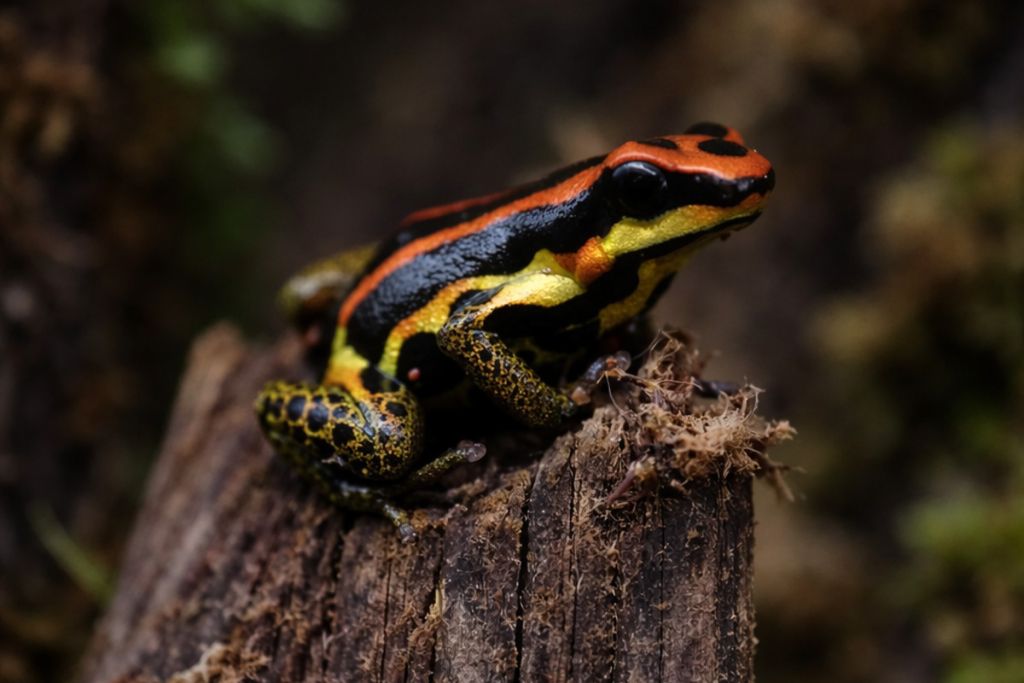
Ranitomeya
Ranitomeya is a genus of small, brightly colored poison dart frogs originating from the Amazon regions of Peru, Brazil, and Colombia. These dwarf species are known for their high-contrast patterns in blue, yellow, orange, and black. Due to their active nature and compact size (approximately 2 to 2.5 cm), they are especially popular within the terrarium hobby. Many Ranitomeya species display fascinating breeding behavior in which they use small water reservoirs, such as bromeliads, for the development of their tadpoles.
Conclusion about Oophaga poison dart frogs
The Oophaga Poison dart frogs are undoubtedly the shining jewels of the rainforests, reminding us of the incredible diversity of life on our planet. With their striking and vibrant colors, complicated behavior and intriguing ecological interactions, these amphibians are a source of ongoing fascination and research for scientists around the world. They are not only a scientific enigma, but also a source of admiration and love for nature lovers. Their presence in ecosystems offers us a glimpse of the delicate balance and complexity of the natural world.
As we continually learn about the special characteristics of these creatures, it becomes increasingly clear that our commitment to their conservation and the preservation of their unique habitats is critical. The loss of these iconic species would not only be an impoverishment to biodiversity, but would also disrupt the fabric of natural interactions in these ecosystems. As caretakers of the earth, we have the responsibility to join our efforts and take action to protect the Oophaga species. poison dart frogs and their natural habitat.
One of the core principles of Biotopo is the pursuit of the highest quality for these beautiful poison dart frogs. We understand that caring for Poison dart frogs involves specific requirements, which is why we offer as many products as possible that meet the highest standards. This includes high-quality terrarium LED lighting and setup materials that replicate the frogs’ natural habitat, as well as premium vitamins and supplements that provide the proper nutrients and help prevent deficiencies while living in a poison dart frog terrarium. By taking this approach, Biotopo seeks to ensure that frogs in captivity receive the same care and quality of life as in the wild. This is of great importance, as well-cared for frogs are better able to reproduce and contribute to their population conservation.
At Biotopo, we also understand the value of these precious creatures and the importance of education and awareness. We strive to not only spread knowledge about these beautiful amphibians, but also to encourage people to be actively involved in conserving these magnificent Poison dart frogs Oophaga Poison dart frogs are fascinating creatures that require special care. Proper care is essential when keeping these frogs in a poison dart frog terrarium. As lovers of these wonderful creatures, we are ready to offer advice. Together, we are committed to preserving and protecting this remarkable species for future generations. Would you like to buy poison dart frogs and learn more? Contact Biotopo.
Interested in poison dart frogs?
At Biotopo, you can buy beautiful Oophaga poison dart frogs. Discover a world of colorful amphibians for your terrarium. Our selection includes various species of poison dart frogs, each with unique patterns and vibrant colors. Every specimen is carefully bred in a controlled environment, allowing us to guarantee healthy and strong frogs. Biotopo poison dart frogs are known for their commitment to sustainability and ethical practices. By purchasing from us, you contribute to the conservation of these fascinating species. Transform your terrarium with the stunning Oophaga poison dart frogs from Biotopo and enjoy the beauty of nature in your home.
Contact us
After receiving your request, we will contact you to discuss your wishes for your poison dart frogs.
 Biotopo